Jason Wang

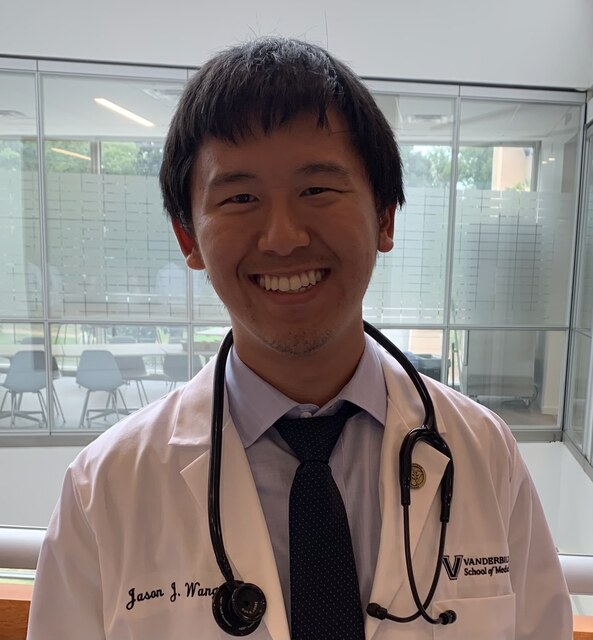
Photo of Jason Wang

MD-PhD student at Vanderbilt University · Oliver Lab, Center for AI in Protein Dynamics

About

I'm a student in Vanderbilt's Medical Scientist Training Program with an interest in developing computational methods for tying protein structure to function, designing new drugs, and engineering proteins. On the clinical side, I want to pursue psychiatry.

Research interests

My PhD work is aimed at using computational tools in protein dynamics to probe the physical mechanisms underlying fundamental molecular processes in neuroscience. I am integrating deep learning models and molecular dynamics simulations to identify hidden conformational states and intermediate structures of neurotransmitter transporters.

Broadly, I am interested in how simple interactions build into complex phenomena: atomic interactions driving large-scale protein conformational change, simple computations driving intelligent systems, and biopsychosocial factors driving complex psychiatric diseases.

Protein dynamics Deep learning Molecular neuroscience

Projects

Dynamics of the serotonin transporter

Oliver Lab, Vanderbilt · Sep 2026–present

Analyzing the dynamics behind serotonin transport, blockade, and release. Combining curated structures, molecular dynamics simulations, deep learning models to map residue motions, probe conformational landscapes, and identify novel ligands to modulate transport.

Water placement on cyclin-dependent kinases

Wankowicz Lab, Vanderbilt · Summer 2025 rotation

Identified patterns of water molecule placement on CDKs to inform the design of more targeted inhibitors.

AlphaFold2 conformations for bifunctional molecule design

Meiler Lab, Vanderbilt · Summer 2024 rotation

Used variants of AlphaFold2 to produce conformations of protein-protein interactions for bifunctional molecule design.

Optical trapping of vesicles

Baumgart Lab, University of Pennsylvania · 2021–2024

Developed LabVIEW code for optical trapping to measure physical properties of plasma membranes. Wrote particle-detection algorithms for protein diffusion experiments.

Topology of the native state and protein folding rates

NSF REU, University of Tennessee at Chattanooga · Summer 2021

Computed quantitative geometric and topological measures of native protein structures to correlate structure with folding rate.

Publications & talks

Publications

2022
The protein folding rate and the geometry and topology of the native state
Wang, J. and Panagiotou, E. Scientific Reports 12, 6384.
Talks & presentations

Apr 2022
Invited talk, Joint Mathematics Meetings
Undergraduate Research Activities in Mathematical and Computational Biology session.

CV

Download CV (PDF)

Education

2024–present
Medical Scientist Training Program
Vanderbilt University School of Medicine
2021–2024
B.A., University of Pennsylvania
Biophysics major; Chemistry and Computational Neuroscience minors. GPA 3.96 / 4.0
2020–2021
Lewis Honors College, University of Kentucky
Chemistry and Biology double major; Mathematics minor. GPA 4.0 / 4.0

Research experience

Sep 2026–present
Graduate student, Oliver Lab, Vanderbilt University
Computational protein dynamics to develop modulators of neurotransmitter transport.
Spring 2026
Rotation student, Monteggia Lab, Vanderbilt
Neuron culture, hippocampal dissections, and whole-cell patch clamping.
Summer 2025
Rotation student, Wankowicz Lab, Vanderbilt
Water placement on cyclin-dependent kinases.
Summer 2024
Rotation student, Meiler Lab, Vanderbilt
AlphaFold2 conformations for bifunctional molecule design.
2021–2024
Undergraduate researcher, Baumgart Lab, University of Pennsylvania
Optical trapping, instrument control, and image-analysis algorithms.
Summer 2021
Undergraduate researcher, Panagiotou Lab, University of Tennessee at Chattanooga
NSF REU in interdisciplinary computational biology. Protein topology and folding.

Honors

  • Barry Goldwater Scholarship, 2023